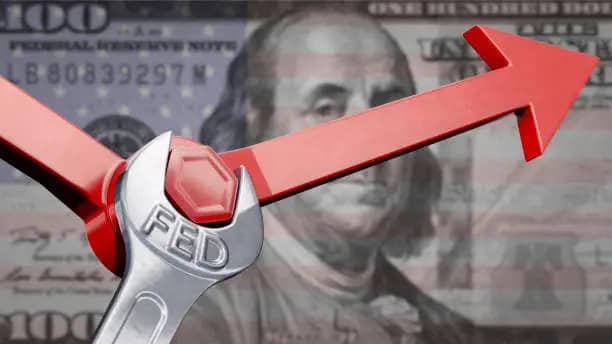
Why a December Fed Rate Cut Is Now Looking Likely: Key Drivers Explained
Growing signs of economic slowing, sticky inflation easing, and market stress are tipping the odds toward a December Fed rate cut — here’s what’s behind the shift.

Why a Fed Rate Cut Next Month Seemed Doubtful — But Is Now Gaining Traction
Not long ago, the idea of another Federal Reserve interest rate cut in December felt remote. But now, more and more market watchers are warming to the possibility. Several converging factors — from labor softness to financial-system strain — are pushing the Fed closer to easing again. Here’s what’s changing and why December is now on the table.
1. Weaker Labor Market Pressures
One of the most important signals the Fed watches is the health of the labor market. In recent months, hiring data has softened, raising worries that consumer spending could soon slow more sharply. According to U.S. Bank analysis, downward revisions to past job gains suggest that the labor market may not be as strong as previously believed. U.S. Bank
A cooling job market gives the Fed more reason to lower rates — not just to support growth, but also to protect employment. At the same time, the risk of a more significant slowdown increases, making a pre-emptive cut more attractive.
2. Ongoing Inflation – But Signs of Moderation
Inflation remains a central concern for the Fed, and it’s not yet completely tamed. Some policymakers are cautious, noting that price pressures (especially in core inflation) continue to linger. noradarealestate.com+2The Times of India+2
However, many economists also see the possibility that inflation may gradually ease in the coming months. As inflation cools, the Fed could find more room to cut without undermining its commitment to price stability. This delicate balance is exactly what’s playing out behind the scenes.
3. Market Sentiment & Rate-Cut Dreams
Markets have been reacting to recent Fed moves. After the Fed’s October rate cut (25 basis points), investors debated whether December would bring another — or whether the Fed would hold steady. The National+1
Though some economists and traders remain skeptical — for example, CBS News recently noted a drop in December-cut odds to as low as 22% among certain forecasters CBS News — others see enough downside risk to justify easing. The uncertainty is fueling a tug-of-war between hawkish and dovish factions.
4. Policy Division Within the Fed
Minutes from recent FOMC (Federal Open Market Committee) meetings show that Fed officials are increasingly split on the timing of another rate cut. Investopedia+1 While many believe a cut is needed, others worry about the message it sends — especially when inflation hasn’t returned to the Fed’s 2% target.
Some policymakers fear that cutting too quickly could risk re-igniting inflation or undermining the Fed’s credibility. The National+1 That said, the very fact that this debate is intensifying is a sign that another cut is not off the table.
5. Lingering Economic and Policy Uncertainty
There’s a broader backdrop of uncertainty: from trade tensions to fiscal policy to geopolitical risks. Some of the Fed’s own staff economists pointed to these risks as justification for a cautious but proactive approach. Al Jazeera
In addition, disruptions caused by government shutdowns have clouded the data picture, complicating decision-making for the Fed. The National+1 Missing or delayed economic reports make it harder for policymakers to assess real-time risks — and that uncertainty may itself be pushing the Fed toward easing.
6. Diminishing Growth Drivers
Structural growth drivers that powered the U.S. economy in recent years — like the Inflation Reduction Act and AI-driven investment — may be losing momentum. IG Without fresh catalysts, the Fed might lean toward cutting rates to provide support even if inflation remains sticky.
In other words, the Fed could be betting on a soft-landing scenario: ease just enough to keep the economy afloat without reigniting price pressures.
What a December Cut Could Mean
If the Fed does cut rates next month, the implications could be significant:
- More Affordable Borrowing: Lower interest rates mean cheaper loans for consumers and businesses — mortgages, credit, investment.
- Market Relief: Stocks may get a boost if the Fed leans dovish, provided the messaging signals ongoing support.
- Global Impact: U.S. rate cuts could ease financial conditions internationally, potentially benefiting emerging markets.
- Risks: There’s a balancing act — too much easing could stoke inflation again, or force the Fed to reverse course later.
Bottom Line
A December rate cut from the Fed is no longer a remote possibility — it’s becoming a serious contender. Weaker labor data, signs of slowing growth, persistent (but possibly easing) inflation, and internal Fed debates are all pushing the argument in favor of further easing.
While the Fed is navigating a tightrope, markets are increasingly pricing in a cut. For investors, businesses, and everyday consumers, staying attuned to incoming economic data (especially job and inflation reports) will be crucial.
The Fed’s next move may not just be about supporting the economy — it could be a strategic bet to manage risks in an increasingly uncertain global environment.

Leave a Reply