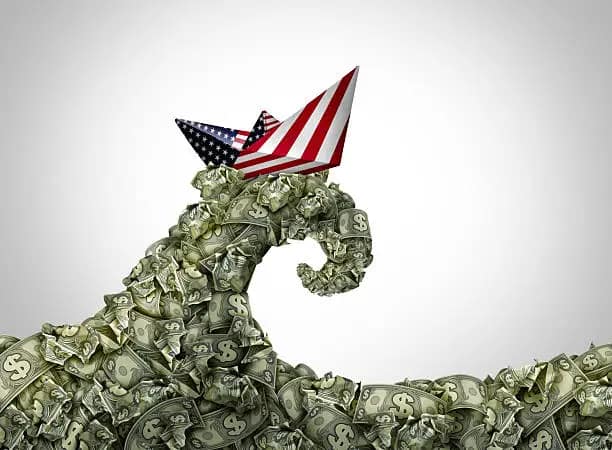
The Cash Lifeline Keeping America Afloat Has Snapped — And Now Everyone Pays
Japan’s massive pullback from U.S. debt is breaking America’s financial lifeline, triggering higher costs, rising risks, and a bill every citizen will feel.
The United States has long relied on a subtle but powerful financial backstop: foreign investors, especially Japan, buying vast amounts of U.S. Treasury debt. This “cash lifeline” has helped fund America’s massive fiscal needs — but the help may be fading. As Japan begins to pull back from its Treasury holdings, the consequences could ripple through global markets and land squarely on every American taxpayer.
Why Japan Matters
Japan is one of the largest foreign holders of U.S. Treasuries. While its holdings have fluctuated over recent years, Japanese investors — both public and private — have traditionally played a central role in funding U.S. debt. FT Portfolios+2Foreign Affairs Forum+2
However, in recent quarters, Japan has sharply reduced its exposure. In the first half of April 2025 alone, Japan reportedly sold over US$20 billion worth of U.S. government bonds. Foreign Affairs Forum+1 Such large-scale sales mark a serious shift away from its status as a reliable backer of U.S. debt.
What’s Driving the Pullback
Several forces are pushing Japanese investors away from U.S. Treasuries:
- Rising Yields at Home
The Bank of Japan’s unwinding of yield-curve control and broader monetary normalization have caused long-term Japanese Government Bond (JGB) yields to surge. AInvest+2AInvest+2 When domestic yields become more attractive, Japanese investors naturally re-evaluate their overseas allocations. - Hedging Costs and Risk
Currency hedging costs have risen sharply, making dollar-denominated bonds less appealing. As the yen’s volatility increases, the effective return on U.S. Treasuries erodes for Japanese investors. mint+2AInvest+2 - Regulatory and Structural Pressure
Japanese life insurers, long major buyers of ultra-long-duration JGBs and foreign bonds, are reducing exposure to riskier, long-dated assets. mint The shift comes amid changing regulatory demands and a re-assessment of portfolio risk. - Global & Trade Tensions
Growing geopolitical frictions — particularly around U.S. tariff policies — have fueled uncertainty. Foreign Affairs Forum Some analysts also suggest that Japan’s Treasury sales could be a strategic lever amid broader trade negotiations. AP News+1
The Consequences for America
When a major buyer of U.S. Treasuries pulls back, the effects are more than technical — they can shake the foundations of U.S. fiscal and financial stability.
- Higher Borrowing Costs
Reduced foreign demand means the U.S. might have to pay more to attract buyers for its debt. That translates into higher yields on Treasuries, increasing the cost of servicing America’s already massive national debt. Foreign Affairs Forum - Budget Strain
Higher interest payments on debt could squeeze the U.S. budget, diverting money from critical programs (infrastructure, social services, etc.) to simply paying interest. - Market Volatility
A sharp sell-off by a large holder like Japan can ripple through global bond markets. Investors may interpret it as a loss of faith in U.S. debt, prompting further capital outflows. Foreign Affairs Forum - Impact on the Dollar
If confidence in U.S. Treasuries weakens, demand for the dollar could also decline, potentially devaluing the currency. A weaker dollar could drive up import costs and inflation.
Broader Implications for Global Finance America
- Global Liquidity Tightening
As Japanese capital returns home, global liquidity may shrink. That could tighten funding conditions worldwide, particularly for markets that rely on the free flow of capital. - Rethinking Safe Havens
The traditional role of U.S. Treasuries as the ultimate “safe asset” could be challenged. If major foreign holders turn away, investors may need to re-evaluate their risk assumptions. - Shift in Power Dynamics
The financial leverage that Japan once held as a major creditor could diminish. That could change how the U.S. and Japan negotiate on issues like trade, diplomacy, and monetary policy.
What It Means for You
Even if you’re not deeply involved in bond markets, the shift has real-world implications:
- Higher Taxes or Lower Services: Rising debt costs may force the government to find new revenue (taxes) or cut spending.
- More Expensive Loans: If Treasury yields rise, mortgage rates and other loans could follow, making credit more expensive for consumers.
- Market Risk: Increased volatility in bond markets could spill into broader markets, affecting retirement accounts, investments, and even consumer confidence.
- Inflation Pressure: A weaker dollar can lead to higher prices on imported goods, pushing up inflation.
What’s Next
- Watch Treasury Yields: If U.S. yields keep climbing, borrowing costs will increase, magnifying the fiscal burden.
- Monitor Japan’s Bond Strategy: Further sales or shifts in Japanese investment strategy could deepen the pressure on global capital markets.
- Evaluate Policy Moves: How the U.S. Treasury and the Federal Reserve respond will be critical. Will they try to attract new buyers, or will they rely on domestic demand?
- Prepare for Volatility: For investors, this may be a time to stress-test portfolios, especially fixed-income or yield-sensitive holdings.
In short: one of America’s most reliable backstops — Japan’s willingness to lend to the U.S. via Treasury purchases — is now retreating. The result? A fragile financial ecosystem that could force higher costs on U.S. taxpayers and shake the very foundations of how America funds itself. If this “cash lifeline” has truly snapped, the bill may be coming due for everyone.

Leave a Reply