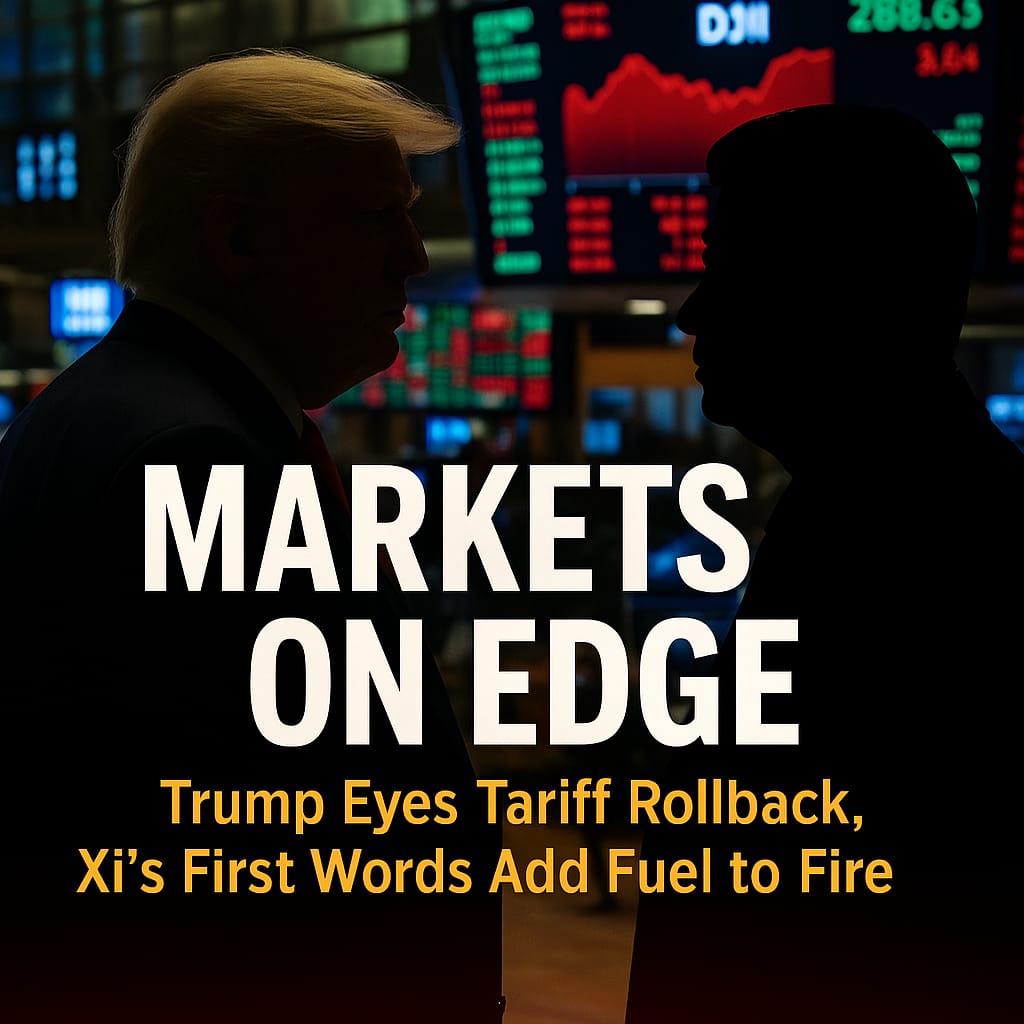
Markets on Edge: Trump-Xi Tariff Rollback & China Fentanyl Deal
U.S.-China trade war pivots as President Trump signals tariff rollback tied to fentanyl crackdown; Xi Jinping responds amid market turbulence. What it means for investors.
Introduction
Global markets are jittery. Donald Trump has floated the idea of rolling back tariffs on Chinese goods tied to fentanyl precursor chemicals, and Xi Jinping has made his first public comments following the deal — a move that’s sending ripples through equities, risk sentiment and credit spreads. Politico+3Reuters+3Reuters+3
For investors reading this on Fundrahub, it’s critical to understand not just what happened, but why this matters for portfolios, sectors and broader global risk. Let’s break it down.
What Happened
- Trump and Xi met on the sidelines of the Asia-Pacific Economic Cooperation summit in Busan, South Korea. Reuters+2Reuters+2
- As part of the agreement, the U.S. announced a reduction in tariffs on China-origin goods tied to fentanyl precursor chemicals—from 20 % to approximately 10 %—bringing the total average U.S. tariff rate on Chinese imports down to ~47 % from ~57 %. Reuters+1
- China, in return, committed to several key concessions: resuming major U.S. soybean purchases, suspending new rare-earth export controls, and pledging a crackdown on illicit fentanyl precursor exports. Reuters+1
- Xi publicly stated that the two sides “reached a consensus” on key trade matters. Reuters+1
Why It Matters for Markets & Investors
- Risk Sentiment Shift – The mere idea of de-escalation in the U.S.–China trade war offers a tailwind for risk assets (stocks, corporate credit) and a headwind for safe-haven assets. Markets tend to breathe easier when tariff escalation appears paused.
- Sector Implications
- Agriculture & soybeans: U.S. farmers may see upside if China honors the large purchase commitments.
- Rare earths / technology / semiconductors: With China pausing export controls, supply-chain risks are somewhat reduced, benefiting tech hardware and EV sectors.
- Importers & manufacturers: Reduced tariffs lower input costs for companies reliant on Chinese goods, boosting margins and competitiveness.
- Valuation Upgrades Possible – Lower trade friction can tilt investor focus back to corporate fundamentals rather than geopolitics, potentially supporting multiple expansions in equities.
- Caution: Not a Full Resolution – The deal is described as a “pause” or truce rather than a comprehensive agreement. Politico+1 Market participants should remain alert to renewed escalation, compliance risks or hidden leverage.
- Macro Factor – Tariff reductions can feed into inflation (input costs), FX (Chinese renminbi stability), global growth, and thus central-bank decisions. All of which are relevant to portfolio strategy.
The Big Risks Ahead
- Implementation Gap: If China does not follow through on the fentanyl precursor crackdown or the soybean purchases, trust may erode quickly.
- Renewed Escalation: The truce could expire within a year or be overturned if either side feels disadvantaged.
- Inflation Re-ignition: Tariff rollback might reduce inflationary pressure, but shifts in supply-chain dynamics could still spark surprises.
- Markets Priced for Perfection: If investor optimism runs too far ahead of delivery, any disappointment could trigger a pull-back.
Actionable Takeaways for Your Audience
- Re-evaluate exposure to: U.S. and Chinese exporters, agricultural commodity plays (soybeans), rare-earth/critical-minerals companies, and global tech supply chains.
- Hedge accordingly: Use options or defensive sector allocations to manage the risk that the trade truce breaks down.
- Watch central‐bank commentary: If inflation drops due to lower imported input costs, the Federal Reserve may revisit its rate path — altering fixed-income valuations.
- Stay nimble: With the deal being more of a pause than a resolution, keep stop-loss orders and risk limits tight.
- Communicate clearly: For your Fundrahub audience, emphasize that the tariff rollback is not a guarantee of smooth sailing — reality will depend on execution and broader macro shifts.
Conclusion
The headline “Markets on Edge: Trump Eyes Tariff Rollback, Xi’s First Words Add Fuel to Fire” is no exaggeration. What looked like a potential escalation in the U.S.–China trade war has morphed into a precarious détente — which markets are responding to with both hope and caution. For investors, the moment presents opportunity, but only if balanced with vigilance.
Expect volatility, stay diversified, and keep one eye on global headlines — because in this game, narrative drives valuation faster than fundamentals in the short term.

Leave a Reply