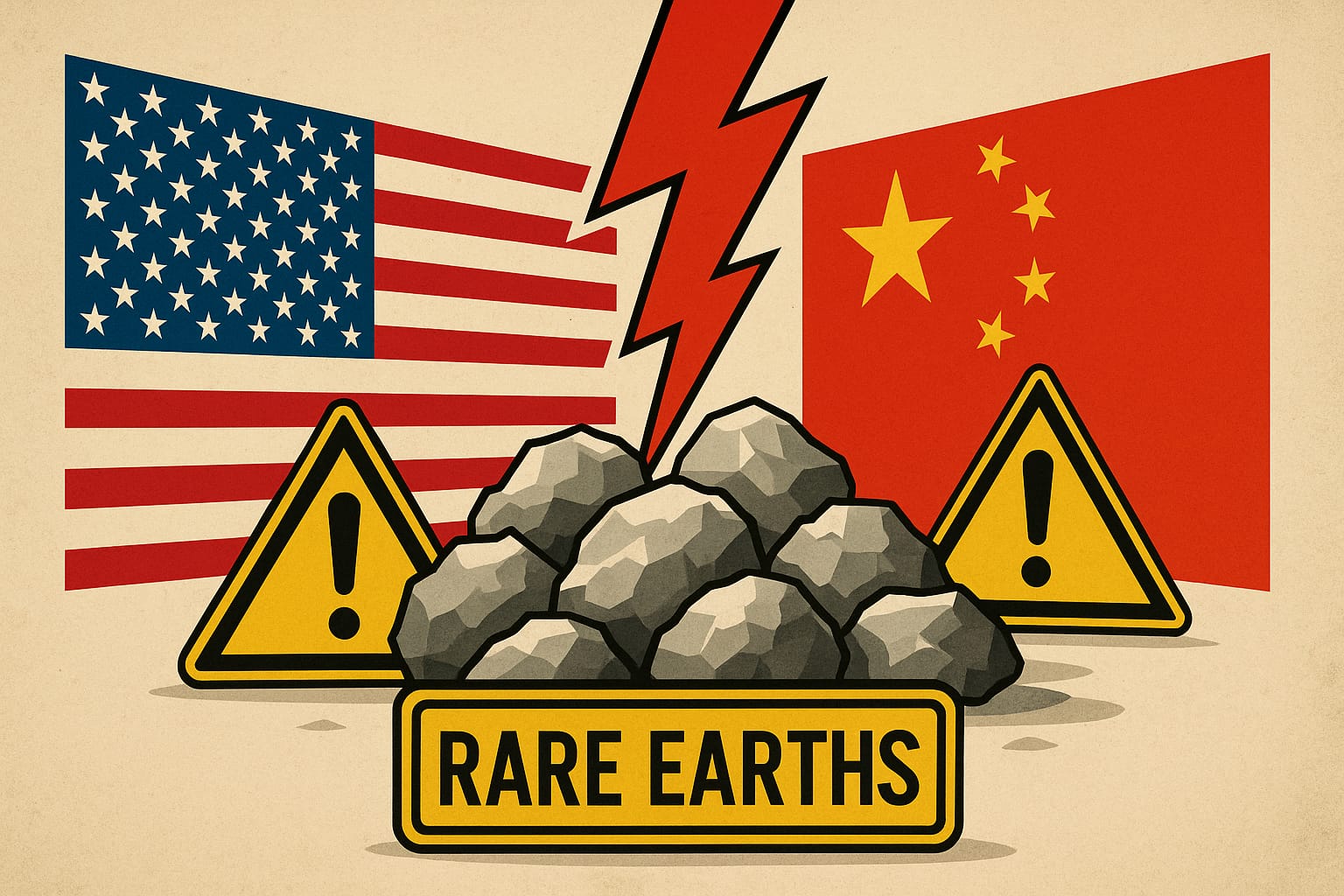
“America’s Supply Line at Risk — Rare Earths Shock Looms Amid U.S.–China Clash”
U.S.–China tensions put rare earth supplies at risk. Experts warn the U.S. could be weeks away from a crisis that may affect defense, tech, and energy industries.
Tensions between the United States and China are heating up again, and this time the fight is over something most people rarely think about: rare earth minerals. These are the key materials used in everything from fighter jets and electric cars to smartphones and clean energy technology.
Experts are warning that the U.S. could be just “weeks away” from a supply crunch if the standoff continues — a situation that could have serious economic and national security effects.
Why Rare Earths Matter So Much
Rare earth elements might sound small, but they are a big deal. These materials are critical for:
- Electric vehicle batteries 🚘
- Wind turbines
- Missiles and advanced military technology
- Smartphones and everyday electronics 📱
For years, China has controlled a large share of the world’s rare earth supply, giving it major leverage in global trade. The U.S. imports most of these materials from China. That’s why this trade fight is raising alarms — not just in Washington but across global markets.
What’s Happening Now
According to new reports, China may tighten its exports of rare earth materials as part of its ongoing trade dispute with the U.S. This comes as the U.S. has also imposed new restrictions on certain high-tech exports.
This back-and-forth pressure has created fears that:
- The U.S. may soon struggle to access enough rare earths,
- Key industries could face delays and higher costs, and
- National defense systems could become more vulnerable.
A senior analyst said,
“This isn’t just another trade fight. Rare earths are the foundation of modern industry and defense. If supply is cut off, it would ripple through the entire economy.”
What the Defense Industry Is Saying
Interestingly, top U.S. defense contractors are trying to calm the storm. Major companies working in defense and aerospace say they don’t expect an immediate disruption, pointing to existing stockpiles and alternative suppliers.
Some have quietly built backup supply chains outside of China over the past few years. Others are exploring partnerships with U.S. or allied country mining firms to reduce reliance on Beijing.
However, experts caution that these backup plans can only cover so much. If the trade spat turns into a long-term standoff, supply pressures could build quickly.
How the Market Is Reacting
The rare earths tension has already made investors nervous:
- Prices of some rare earth elements jumped in recent trading.
- Shares of mining companies outside China saw sharp gains as traders bet on increased demand.
- Tech and defense stocks showed signs of caution, reflecting fears of production delays.
This situation highlights how fragile global supply chains can be when politics enters the picture.
Why This Matters to the U.S. Economy
A shortage of rare earths wouldn’t just affect big companies. It could have real economic consequences:
- Higher costs for tech and energy products.
- Delays in manufacturing, especially for EVs and military equipment.
- Ripple effects through jobs and investment in critical industries.
Rare earths are often called “the hidden backbone” of the modern economy — and any break in that backbone could hurt.
What’s Next in the U.S.–China Standoff
Analysts say the next few weeks are crucial. If talks between the U.S. and China fail or tensions escalate, the situation could worsen quickly. Some key things to watch:
- Export policies from China — any new restrictions would be a major warning sign.
- U.S. response — Washington may look to ramp up domestic production or fast-track deals with allies.
- Market moves — rising prices or stock swings could signal how serious the crisis is becoming.
Several U.S. lawmakers have also renewed calls to invest in domestic mining and processing, to make the country less dependent on foreign supply.
Final Thoughts
The rare earths fight is a reminder that economic power isn’t just about money — it’s about control over critical resources.
For now, big defense contractors say they’re not panicking. But beneath the calm, markets and policymakers know how fragile this situation is. A sudden move by China could send shockwaves through industries that shape everything from energy security to military readiness.
The coming weeks may decide whether this is just a warning shot — or the beginning of a serious supply chain crisis.

Leave a Reply